
Suitable diet
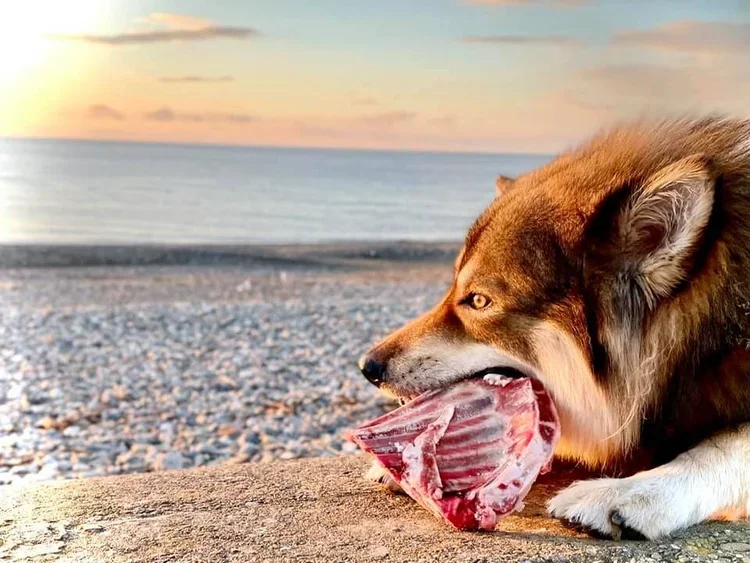
The most suitable diet for a Timber dog and any other dog for that matter is a raw diet. As dogs descend from wolves, they thrive on a species appropriate diet of raw meat, meaty bones and offal. Raw food is fresher and more natural and it is what they would have eaten in the wild before being domesticated.
There are many benefits of raw feeding which are; healthier skin, shinier coats, cleaner teeth and fresher breath, smaller stools, less health issues and many more.
For those owners who do not wish to feed raw, a good quality kibble should be provided instead.
Exercise
Timber dogs are happy to be couch potatoes or go hiking up hills with you. They bond very closely with their owners and want to be with them, so it doesn’t matter what you’re doing - your Timber will want to be a part of it. They see your family as their pack and want to be by your side.
The more exercise you give to your Timber dog, the more exercise they will then require. You can easily turn them into an athlete.
Grooming
Timber dogs vary in coat type. Some have a standard coat which is very easy to maintain. The standard coat typically moults out twice a year, they blow their coat over a period of time in tufts of fur.
Some have a longer coat, including the tail hair which does require frequent grooming to prevent matting. Timber dogs do benefit from a professional groom 1-4 times per year, this is because the de-shed clears all the dead fur and dander out of the coat.
Timber dog puppies have their claws trimmed weekly whilst in the breeders care. This is to ensure they are kept short so that they do not hurt the mum when feeding. This also sets them up for success when it comes to having their nails trimmed later in life. We advise that you keep up with regular nail trims so that your dog stays calm during nail trims.
Health advise
Our breeders advise that you do not allow your Timber dog puppy to climb stairs, jump in and out of cars until over a year old (or until you can’t comfortably lift them anymore). This is due to the fact that puppies bones are not fused together and it can cause long lasting damage to your puppy. They should not participate in sports or Agility until over 15 months old for the same reason.
The breeders of our club do extensive health testing on each parent dog to try and provide you with a healthy puppy. We recommend owners carry out a Embark DNA test on their own dog to check for over 250 genetic diseases.
Training
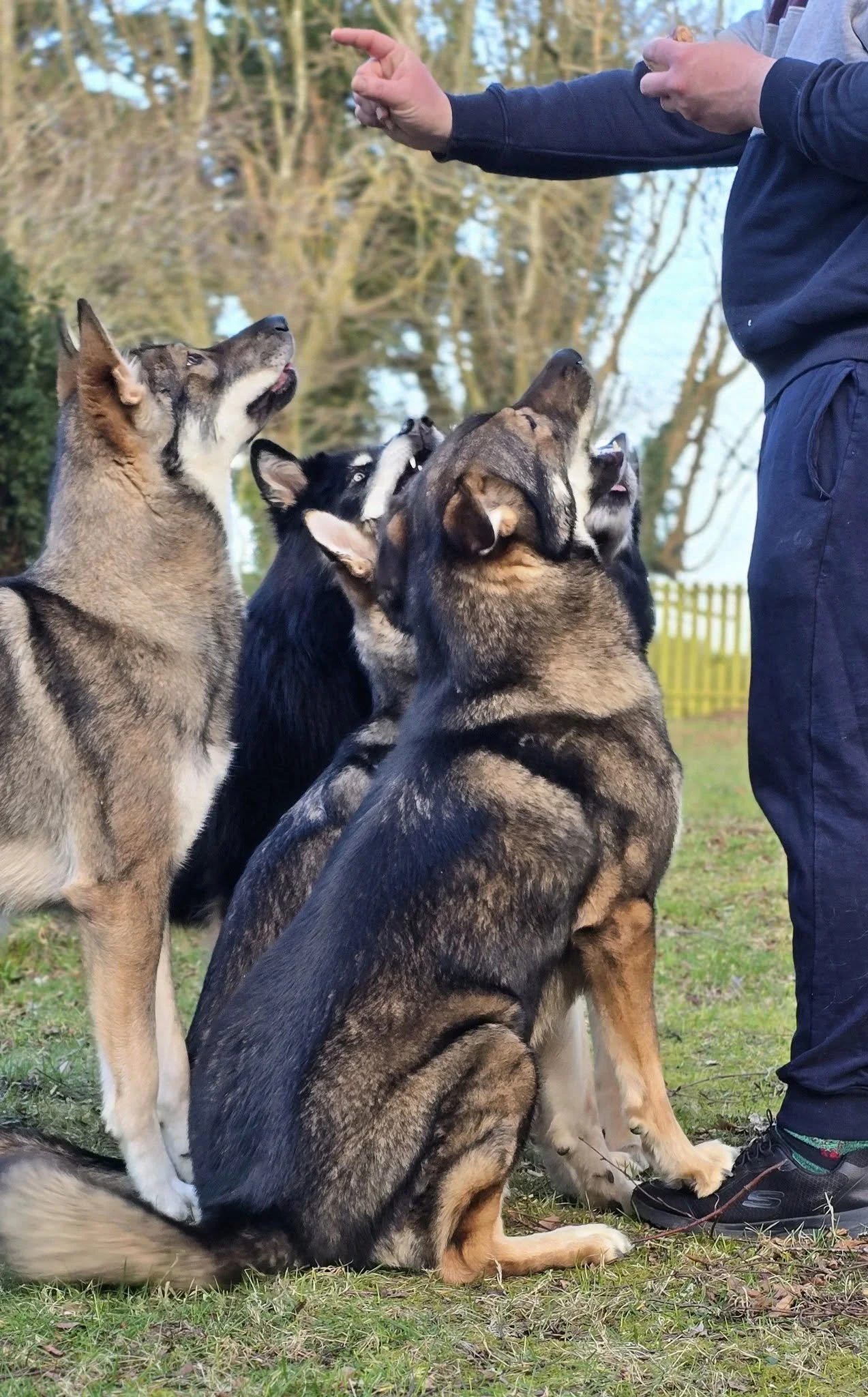
Timber dogs are a very intelligent breed of dog. Due to them having German Shepherd DNA they are very responsive to training. The saying is ‘You only get out what you’re prepared to put in’- meaning the more time/effort and training you give your Timber Dog, the better behaved and well mannered they will be.
People often ask if Timber Dogs can be let off lead, due to them having husky in their DNA some people think they may have bad recall like many huskies. Most Timber Dogs can enjoy off-lead time, and this is due to the owners training their puppy from young. We recommend attaching a long line to your puppy (in a safe area) and allowing them free access to roam around. The purpose of the long line is that if your puppy/dog is non-responsive to you, the line is long enough for you to be able to grab it if needed. Teaching recall at home in the garden is the best place to start, using treats/toys and most importantly a clicker to reward. The main thing to remember when it comes to recall is that you need to be the more exciting object in any scenario when your dog is offlead. So long as you can get your dogs attention, they will come back to you.
Timber Dogs can sometimes posses a high prey drive, though many successfully live with other dogs and animals including ducks, rabbits, horses, geese, goats, chickens etc. This is something you can attempt to train out and avoid by early socialization. The more animals your puppy is exposed to from a young age, the more socialized they will be therefore less likely to have a prey drive and want to chase animals.
Many Timber Dogs enjoy participating is Agility, Canicross and other sporting activities. These are great ways for you to work your dog, mentally and physically and great bonding activities. We do not recommend any sporting activities with your Timber Dog until they are over the age of 15 months due to their skeletal system not being fused. If you over exercise your large breed puppy under the age of 15 months old you risk your dog getting hip dysplasia, this is due to the fact that they grow slowly and their bones do not generally fuse until over 12 months old.
Toilet/house training is generally easy with this breed. Our breeders train the puppies to use puppy pads, to make it easier to house train your puppy. They’re naturally quite clean dogs. When taking your puppy home, if you’re planning on using a crate we recommend using a small crate and gradullay upping the size as your puppy grows. This helps with toilet training because when a puppy has a large cage, they will toilet in the empty side of it, if they have a smaller cage they tend to not toilet as they do not want to lay in their dirt.